
What is Sensory Analysis?
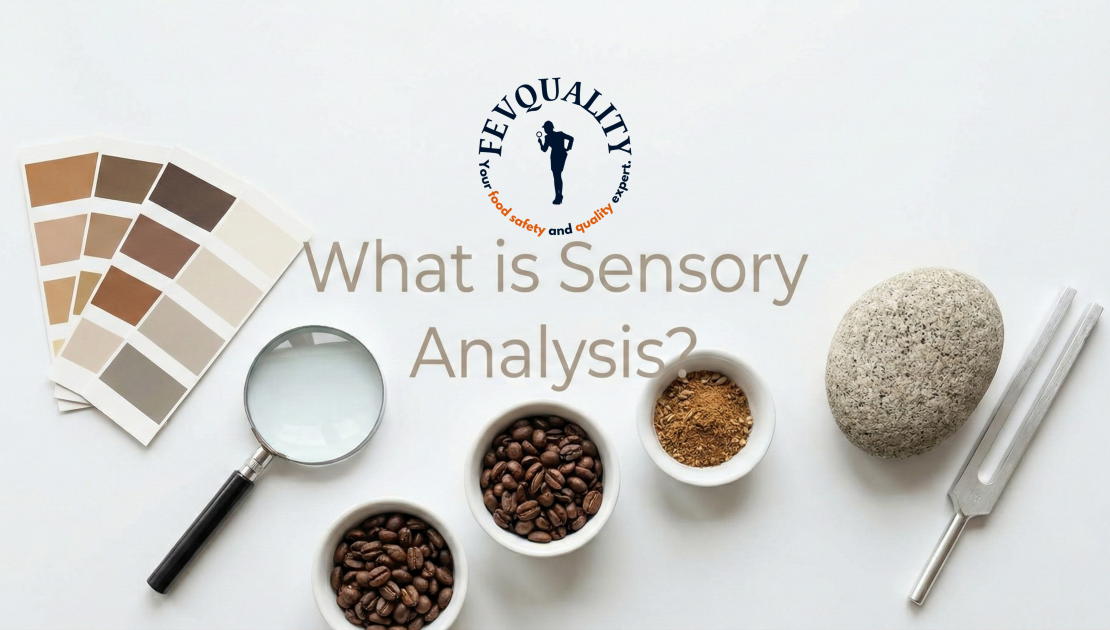
More Than Just Taste: A Scientific Approach to Sensory Analysis in Food
In the realm of food quality assessment, flavour is often assumed to be the primary parameter. However, professionals ranging from FSSC 22000 certified factories to industrial catering operations know the truth: taste is merely the tip of the iceberg.
The process that defines a food product as “successful” or “compliant” is a multi-layered, multidisciplinary evaluation that occurs in the brain within seconds. This is where Sensory Analysis comes into play.
Sensory Analysis: Not Just a “Tasting”, But a Scientific Discipline
Sensory evaluation is a scientific discipline that measures, analyses, and interprets the characteristics of food as perceived by our five senses. While laboratory instruments can provide precise data on pH or water activity, only human senses can measure how a product is actually perceived by the consumer.
Therefore, sensory analysis plays a pivotal role in:
-
Validating catering menus,
-
Ensuring product consistency in mass production,
-
Maintaining Food Safety Culture and brand reputation.
The Cycle of Experience: The Kramer Circle
Whether you are manufacturing a packaged snack or preparing thousands of meals, the consumer experiences food in a specific order. This sequence is described in the literature as the Kramer Circle:
1. Appearance (Vision)
Colour, gloss, and form. The consumer makes a subconscious decision before even tasting the product. Appearance is the first step of trust.
2. Kinesthetic Properties (Texture and Consistency)
Temperature, texture, and mouthfeel. The expected “crunch” or the viscosity of a sauce… A slight deviation in texture is perceived directly as a quality defect, which can be as critical as a non-conformity in an audit.
3. Flavour (Aroma and Taste)
The final signature. The combination of basic tastes on the tongue and olfactory receptors in the nose seals the product’s character in the mind.
Why Is It So Critical for Standards like BRCGS and FSSC?
A correctly structured sensory analysis system allows you to detect issues before they arise, rather than after the fact. It is your most powerful tool for monitoring raw material changes and measuring shelf-life stability.
Moreover, global standards such as BRCGS Food Safety Issue 9 require ongoing organoleptic (sensory) testing to ensure products meet customer specifications and authentic recipes.
Document Your Expertise, Elevate Your Standards 🎓
In the competitive food industry, success is measured not only by “safe production” but by sustainable sensory quality. Is your team mastering this scientific discipline?
At Fevquality & Fevkalite, we transform sensory analysis from an intuitive practice into a measurable quality parameter for factories and businesses.
How We Can Support You:
🇬🇧 For UK & International Clients (Auditing & Consultancy):
Ensure your sensory evaluation protocols meet global standards. We integrate sensory analysis into your Quality Management Systems (QMS) to ensure you are audit-ready for BRCGS and FSSC certifications.
👉 Contact Fevquality UK for consultancy and auditing services.
🇹🇷 For Turkish Clients (Training & Certification):
Do you need to train your team? Through our Turkey-based partner Fevkalite, we offer comprehensive “Sensory Analysis Training and Certification” programs to build your internal sensory panels.
👉 Visit Fevkalite.net for training details in Turkey.
“The only thing we need to create a successful team is to work together.”
Author: Büşra Gürel Baştürk